
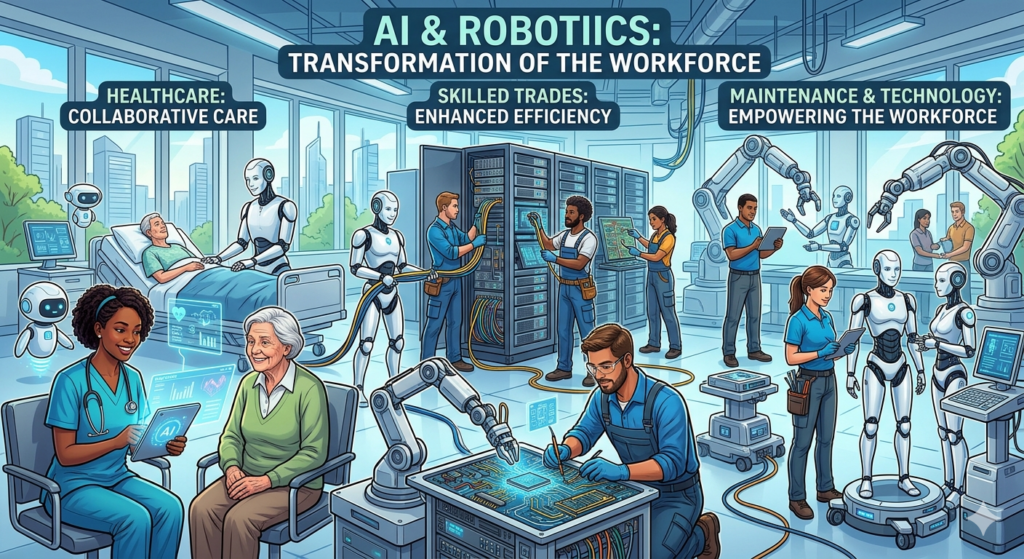

Recent analysis shows that over the next two to three years, 50 to 55 percent of US jobs will be reshaped by AI, while only 10 to 15 percent face outright elimination. Most people will keep working but need to learn how to collaborate with AI and robotics tools instead of competing against them.
Robotics adds a physical layer to AI’s impact. While current reports focus mainly on software AI, humanoid robots and automation are advancing fast, especially in manufacturing and repetitive tasks. However, they often create new demand for people who can install, maintain, program, and oversee them. This strengthens certain fields rather than wiping them out.
Here’s a deeper look at the strongest industries, updated with robotics insights, plus how to break into them.

1. Healthcare Roles Nurses, nurse practitioners, physical therapists, and mental health professionals remain highly resilient. Empathy, complex judgment, and hands-on patient care are tough for robots to fully replace. AI helps with documentation and diagnostics, but human connection stays central. How to get in: Nursing typically starts with an associate or bachelor’s degree plus passing the NCLEX. Nurse practitioners need a master’s or doctorate. Therapists usually require a relevant master’s and state licensing. Learning AI tools for clinical support gives you an edge.
2. Skilled Trades (Electricians, Plumbers, HVAC Techs) This sector is actually getting a huge boost from AI and robotics. Building and powering AI data centers requires massive amounts of electricity and cooling, driving huge demand for electricians, plumbers, and HVAC workers. There’s already a major shortage—BLS projects electricians growing 9% with about 81,000 openings per year. Robotics may automate some factory tasks, but complex, unpredictable on-site work in buildings and data centers still needs humans. Many tradespeople will also maintain and troubleshoot robotic systems. How to get in: Finish high school or get a GED, then join a trade school program or paid apprenticeship through unions or community colleges. Training usually takes 3 to 5 years of combined classroom and on-the-job work. No heavy student debt, and pay is strong.
3. Robotics and AI-Related Careers This is one of the hottest areas. AI engineers top fastest-growing job lists. New roles include robotics technicians, who install, maintain, and repair robots and automated systems. Robotics engineers design the hardware and software. Humanoid robots are moving into factories to handle labor shortages, creating demand for people who integrate, program, and fix them. How to get in: Robotics technicians often start with an associate degree in mechatronics, automation, or electrical engineering technology, plus on-the-job training. Average pay is around sixty to seventy thousand dollars. Robotics engineers usually need a bachelor’s in mechanical, electrical, or robotics engineering, with many pursuing a master’s. Build a portfolio with projects, internships, or robotics clubs. Certifications from robot manufacturers can help too.
4. Green Energy and Sustainability AI’s massive energy appetite is speeding up renewable energy projects in solar, wind, battery storage, and smart grids. These fields need both technical and installation skills, often overlapping with trades. How to get in: Solar or wind tech roles can start through apprenticeships or specialized certifications. Broader sustainability jobs value degrees in environmental science or business. Trade backgrounds are a big plus for installation and maintenance work.
The Bottom Line AI and robotics won’t just eliminate jobs—they’ll transform most of them. The winners will combine tech fluency with human strengths like creativity, problem-solving, and physical adaptability. Treat learning as a lifelong habit: get comfortable using AI tools now, pick up basic robotics or automation knowledge where you can, and focus on industries that value human oversight and hands-on work.
Skilled trades actually look stronger than ever because of the AI boom, not weaker. Those who reskill early will have the clearest advantage.